Jesus also speaks of a yoke, but His invitation leads us to a very specific place with Him.
“Take my yoke upon you and learn from me… and you will find rest for your souls.” — Matthew 11:29
What brought you to the practice in the first place?
Pause & Ponder
Before moving any further, consider the intention behind what you are seeking.
What were you hoping to find?
Peace? Healing? Strength? Connection? Belonging? Spiritual growth?
A deeper understanding of yourself? Simply a place to breathe and be still?
There is nothing wrong with asking these questions. I spent years seeking many of these same things.
But perhaps there is another question worth considering.
Where am I looking for what my soul is longing for?
Sometimes we become so focused on the practice, the path, or the next thing that promises greater peace that we never stop to ask what we are actually searching for.
Is Yoga Simply Physical Movement?
Bending forward, kneeling, stretching the spine, or lying quietly are not inherently acts of Hindu worship. The Bible does not specifically teach that performing a yoga posture automatically invokes a deity.
But yoga's historical connection to Eastern spiritual traditions is real, and I believe it's important to understand what those traditions actually teach.
The word yoga comes from the Sanskrit root yuj, meaning “to yoke, join, or harness.” In some Hindu traditions, yoga is understood as a path toward union with Brahman, the ultimate reality. Other schools emphasize liberation, spiritual realization, or devotion to the divine.
Traditionally, yoga extends far beyond physical exercise. Asanas (postures), pranayama (breath regulation), and meditation have been used as disciplines within these spiritual paths, sometimes preparing the body and mind for deeper states of meditation and spiritual realization.
While many people today practice yoga simply for physical fitness, removing Sanskrit names, chanting, or spiritual language doesn't erase the historical philosophies associated with these practices.
And this is where my own understanding began to change.
For years, I practiced, studied, and taught yoga, embracing not only its physical benefits but also many of its spiritual teachings. As I returned more deeply to Scripture, I began questioning what I was participating in, what I was giving spiritual authority to, and whether those beliefs aligned with my faith in Jesus Christ.
I came to recognize that caring for my body doesn't require me to follow a spiritual path rooted in beliefs I no longer share.
Movement itself or engaging the body with strength building or stretching is not my concern. It's the spiritual foundation, teachings, and intentions surrounding the practice that I believe deserve careful discernment.
What am I choosing to be yoked to in order to find it?
Jesus offers an invitation that has taken on an entirely new meaning for me:
“Take my yoke upon you and learn from me… and you will find rest for your souls.” — Matthew 11:29
Maybe what we are seeking matters. But where we are seeking it matters too.
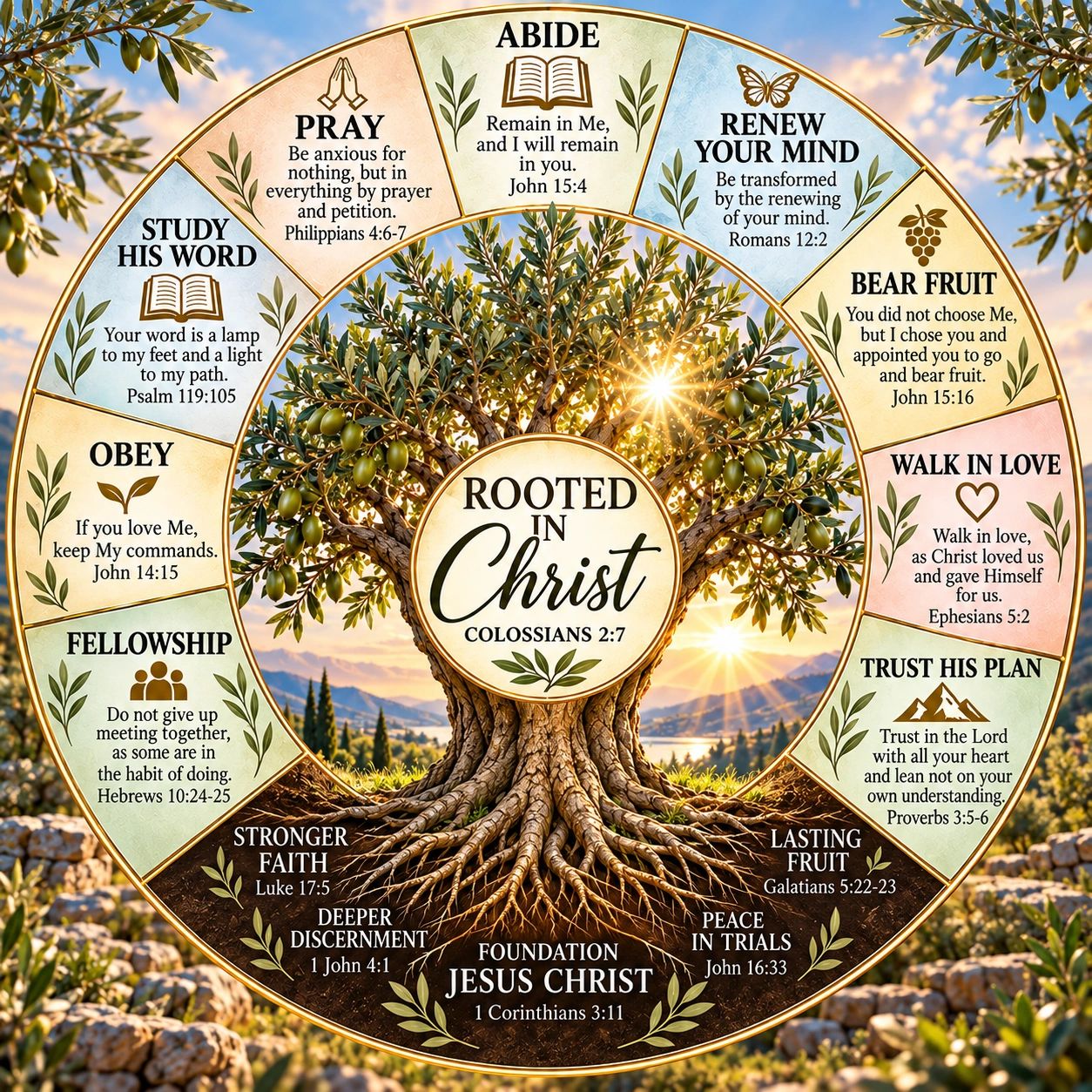
Rooted in Christ
A simple reminder to pause, pray, and return to what matters most. Let your roots grow deep in God’s Word, your heart remain close to Him, and your life bear the fruit of His love.
“Rooted and built up in him…” — Colossians 2:7